01. Bag / Keys Forgotten Reminder (Lite)
Scenario
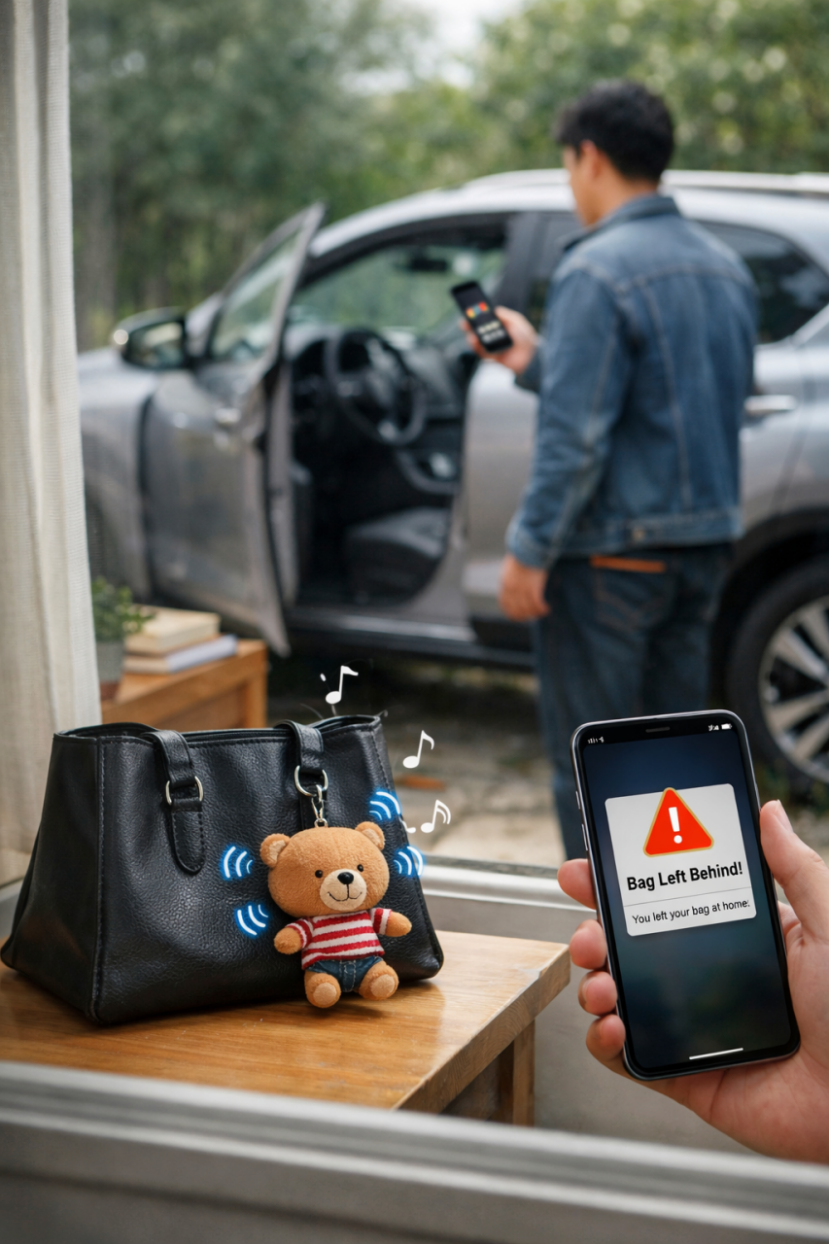
A doll hangs on a handbag or bottle pouch; the core is attached to the keys. When a person walks away and the bag or keys are left behind, the phone immediately warns “You may have forgotten something,” while the doll or tag left behind emits sound or vibration.
Principle
No location tracking. The system triggers only at the moment of abnormal separation between a person and an important item, issuing a one-time, two-way reminder.
What’s different
Not searching after something is lost, but detecting the moment you are about to forget. Reminds both the person and the object, with low power and no continuous connection.
02. Airport Checked-Luggage Tag (Bag Falls Behind)
Scenario
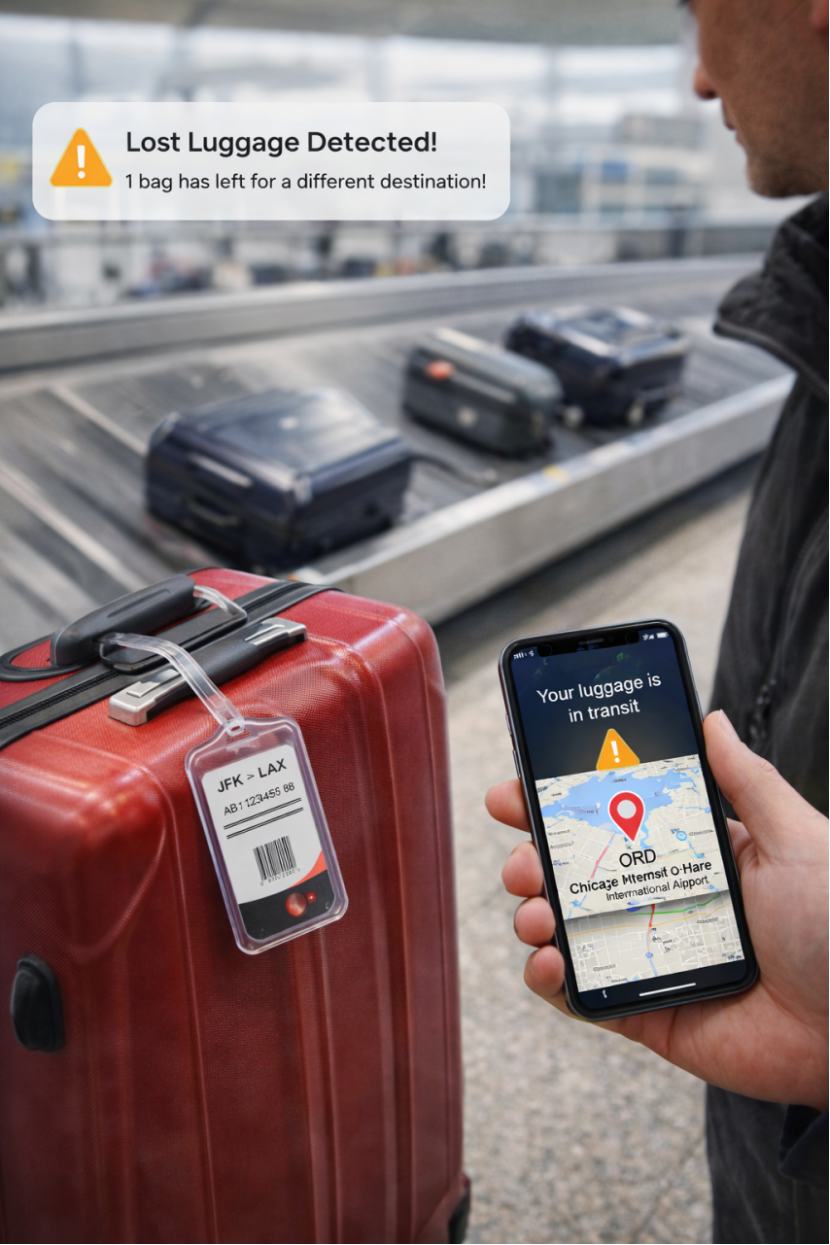
The core is embedded in a plastic luggage tag. When other bags on the same flight and destination continue moving but one bag does not, the system identifies that bag as fallen behind.
Principle
Instead of continuous tracking, the system detects anomalies based on relative consistency among companion luggage, triggering an event once inconsistency appears.
What’s different
Not waiting until passengers notice missing luggage. The system detects the problem inside the logistics process; users can query status only when needed.
03. Parent–Child Separation in a Mall
Scenario
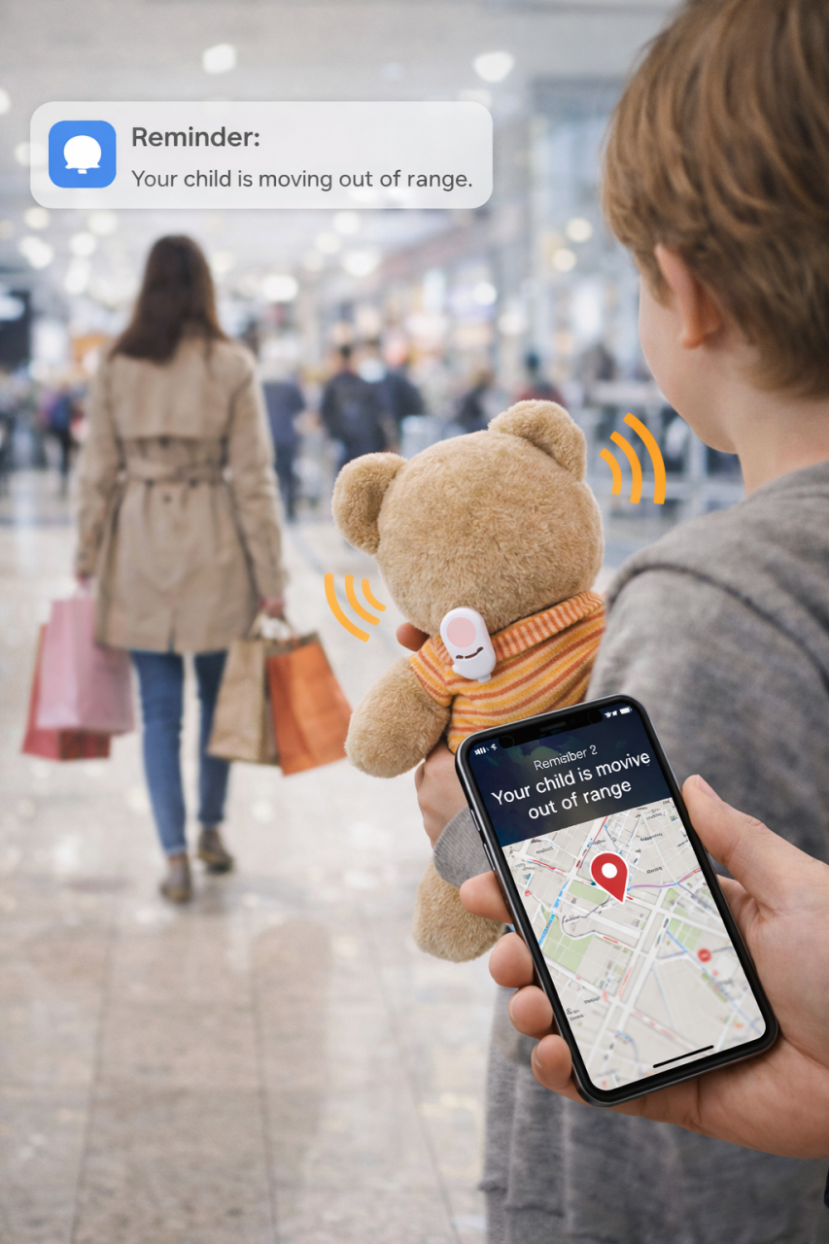
The child carries a doll. When separated from the parent in a mall or public space, the parent receives an immediate alert, and the child’s doll vibrates or sounds to prompt the child to stop and stay aware.
Principle
The system first detects separation and alerts instantly, then enables location confirmation if needed and identifies nearby adults with similar dolls as potential helpers.
What’s different
Not only location, and not waiting until the child is lost. It resolves risk early through a chain of alert, confirmation, and nearby assistance.
04. Elderly Daily Companion & One-Press Help
Scenario
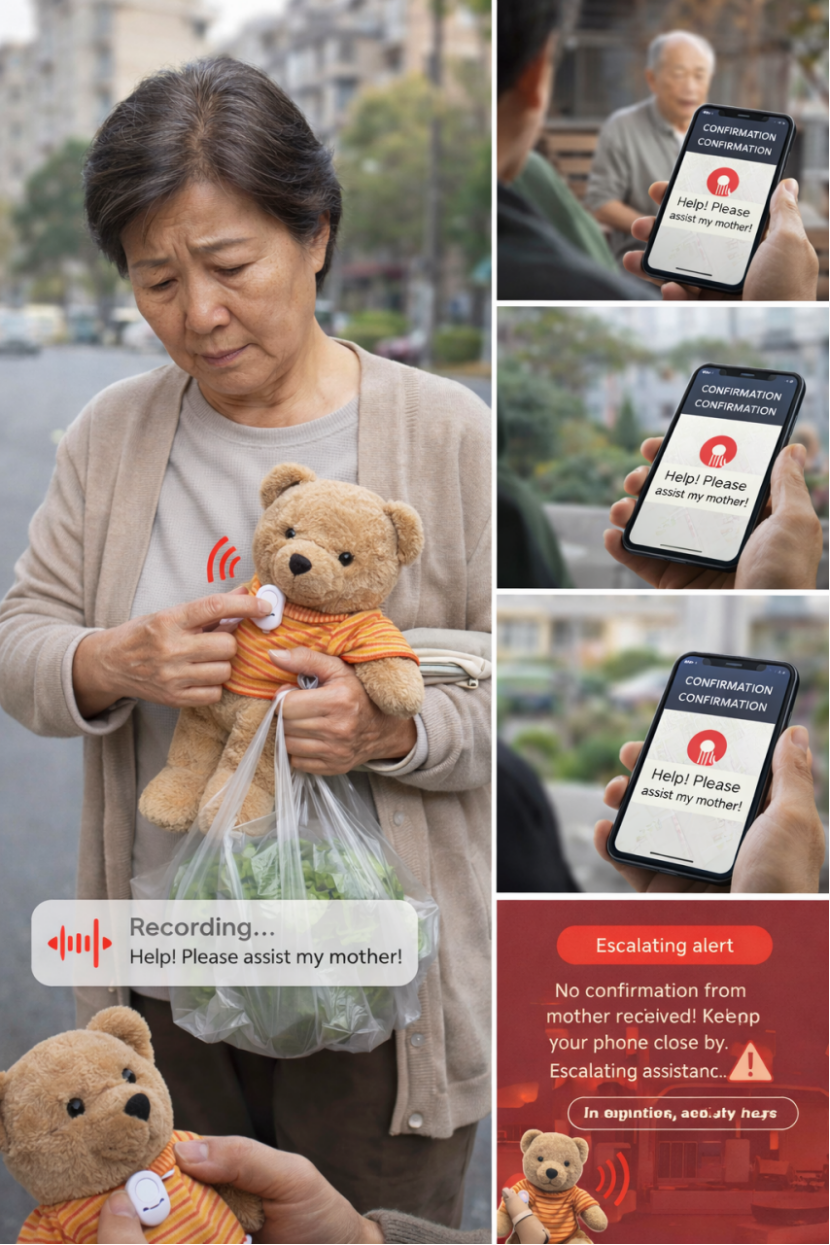
The elderly person carries a doll. During normal activities, the system stays silent. If they leave their usual activity range or press the doll for help, the event is recorded and family or caregivers are notified.
Principle
Normal life is the baseline. The system intervenes only on abnormal deviation or manual trigger, and escalates automatically if confirmation is not completed.
What’s different
Not constant monitoring or one-time alarms. Quiet by default, one-press help when needed, and automatic escalation if unconfirmed.
05. Family Trip Luggage Arrival Confirmation
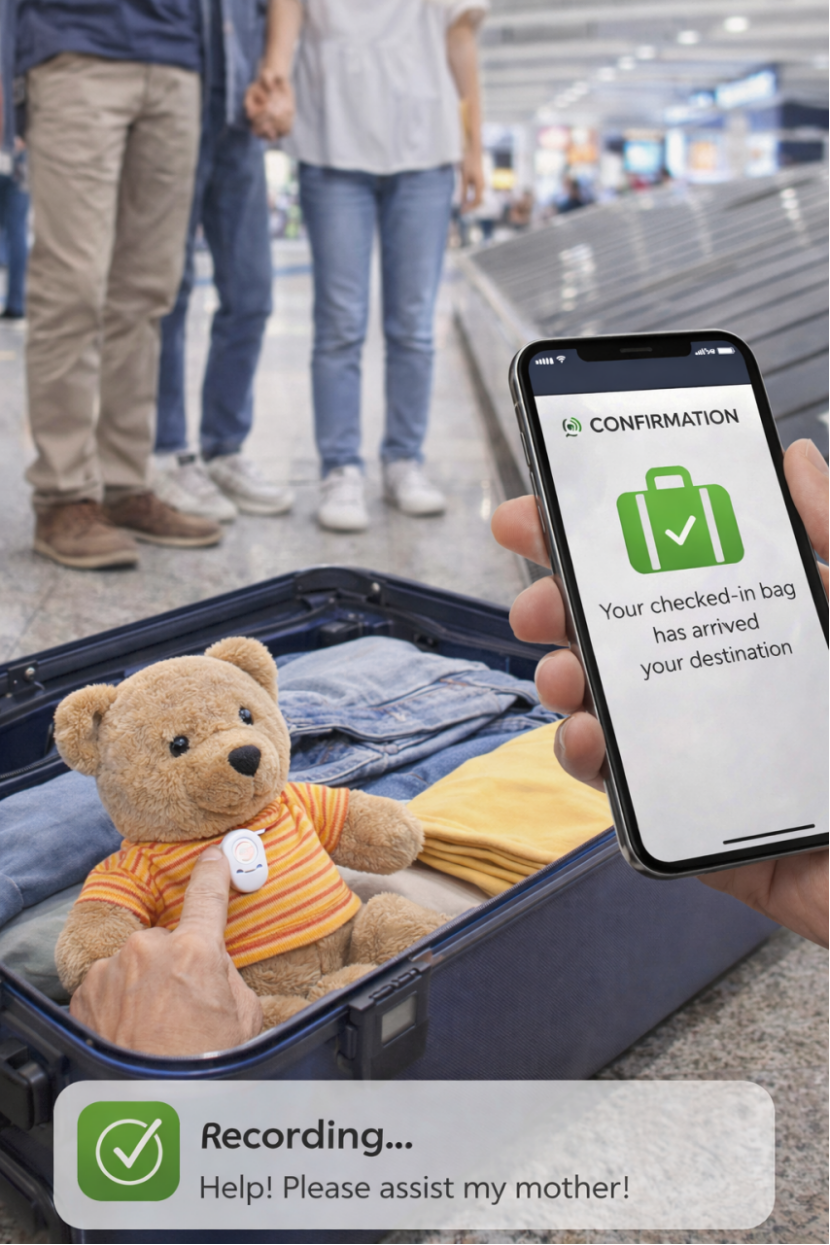
Scenario
A doll is placed inside checked luggage. Upon arrival, the phone automatically confirms whether the luggage arrived together with the family.
Principle
Uses trip-consistency between person and luggage and triggers a one-time confirmation at arrival, without full-journey tracking.
What’s different
Instead of manual searching after the fact, uncertainty ends immediately upon arrival.
06. School / Park Geofence + One-Tap Acknowledgment
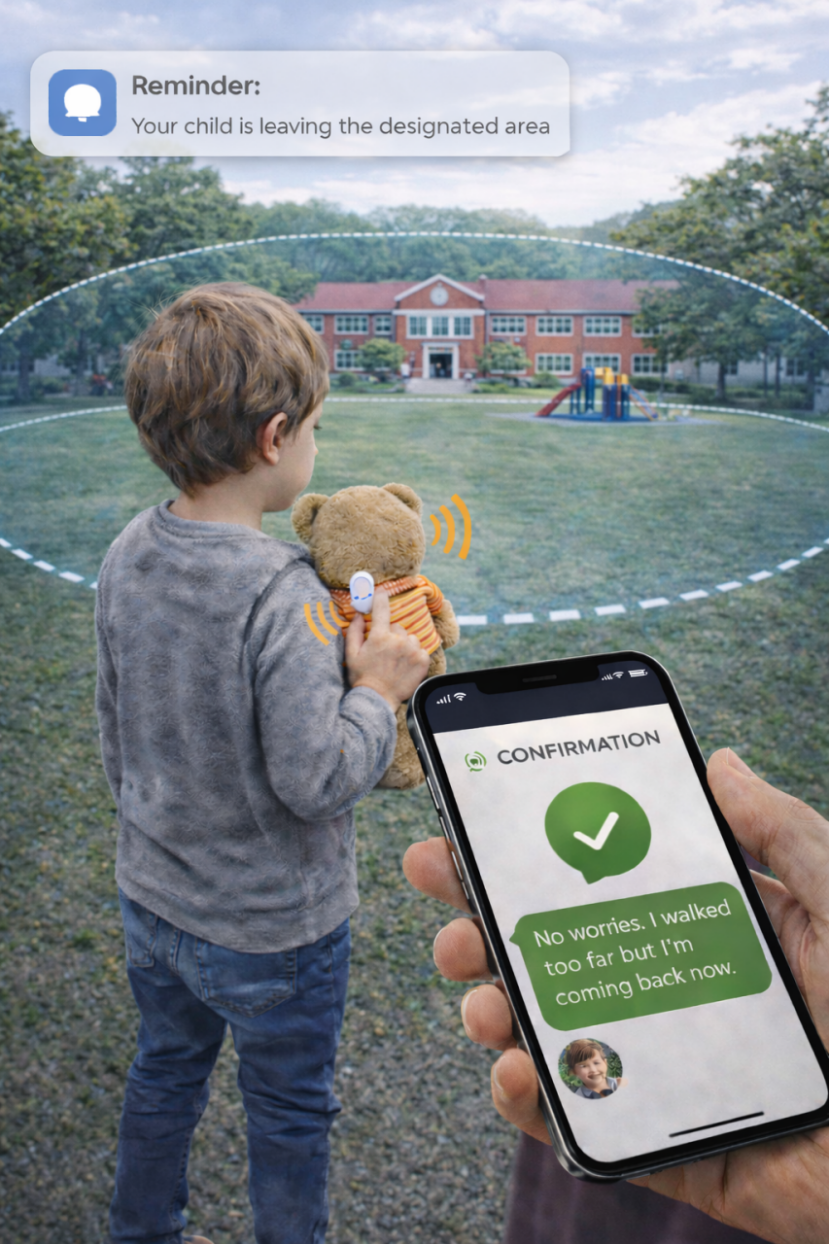
Scenario
A parent sets an activity boundary. When the child crosses it, the parent is alerted and the child’s doll vibrates as a cue.
Principle
The system detects boundary crossing and supports a one-tap acknowledgment from the child when queried.
What’s different
No continuous tracking or repeated calls. One alert, one confirmation.
07. Doll Encounter Reminder
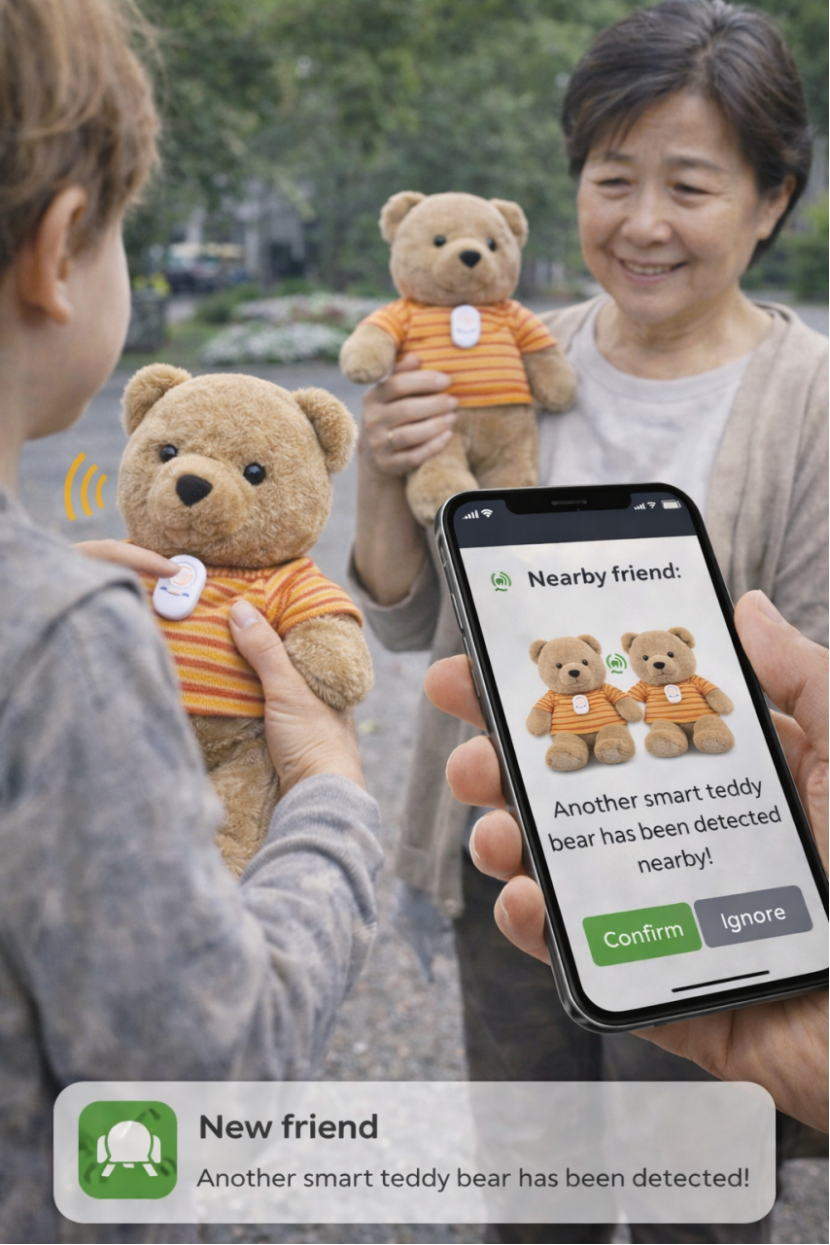
Scenario
When two doll carriers come near each other in public, the phone notifies their presence. Responding or ignoring is entirely optional.
Principle
Detects short-term proximity only and sends a single prompt.
What’s different
Not forced social matching. Presence is noticed; choice remains with the person.
08. Crowd Gathering Visualization
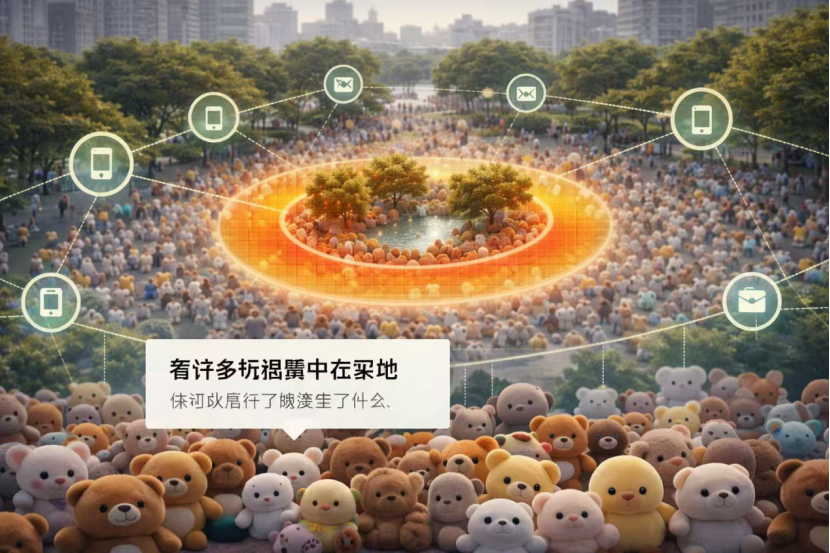
Scenario
When many doll carriers naturally gather in one location, the system displays a concentration state.
Principle
Detects changes in density and quantity, showing only the result.
What’s different
No behavior guidance or social mobilization. State is visible; action is voluntary.
09. Group Purchase & Organization
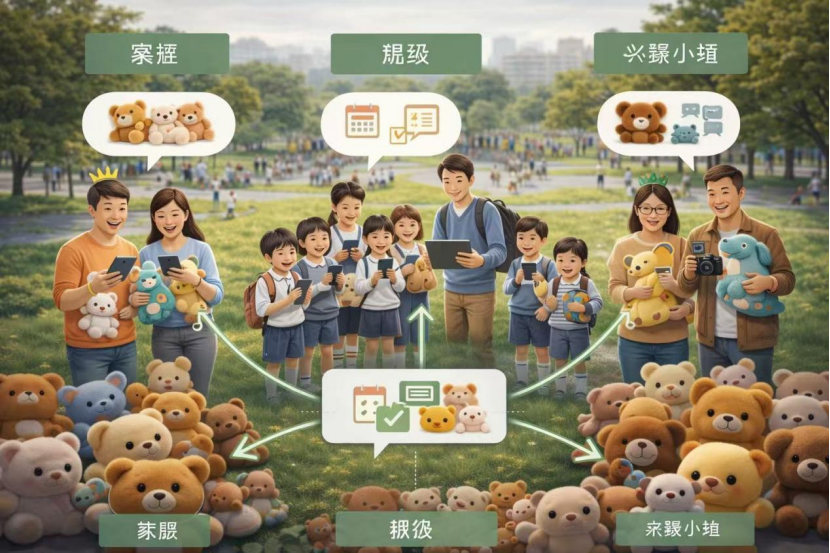
Scenario
Families, classes, or interest groups form real groups through shared doll ownership. Organizers initiate events; members respond based on real-world availability.
Principle
Built on real relationships and event-driven responses only.
What’s different
Not virtual communities or forced check-ins. Organization follows reality.
10. Ranch Geofence Grazing
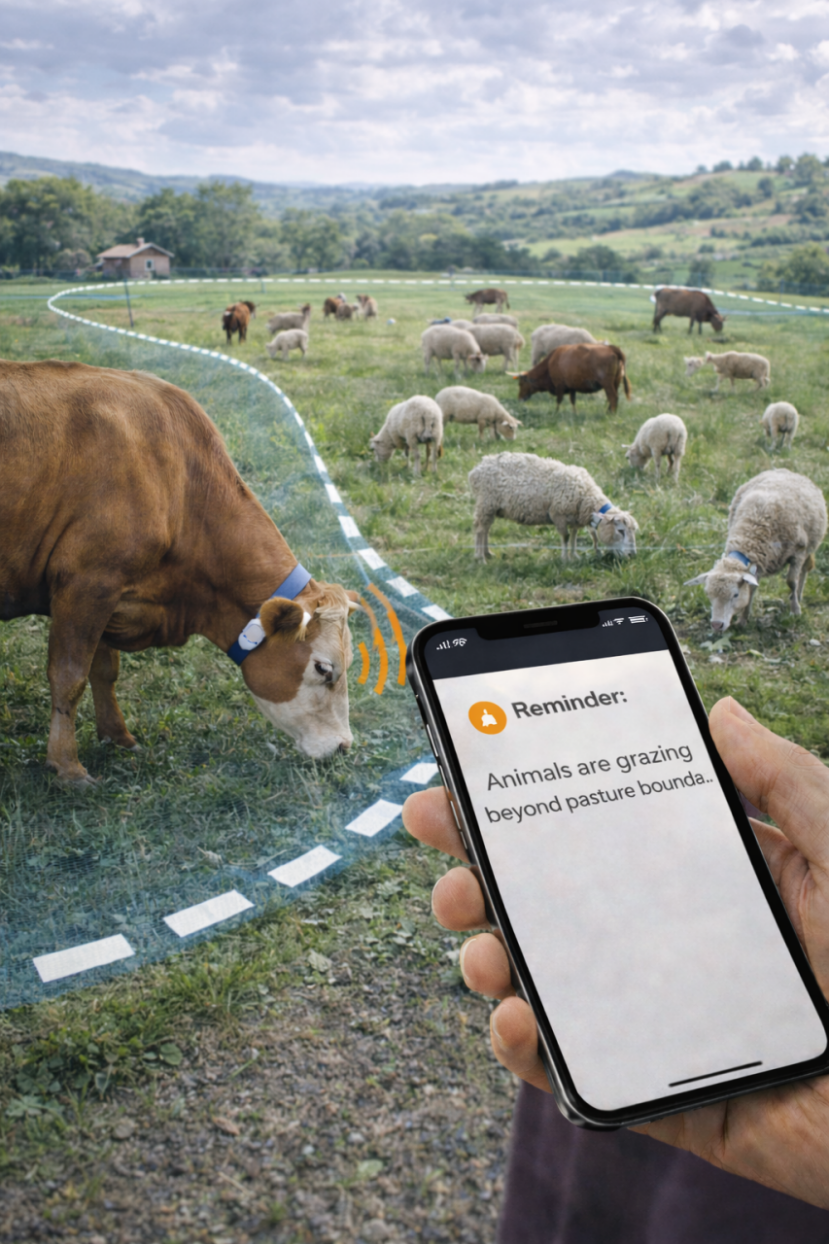
Scenario
The core is embedded in livestock collars. Animals graze freely; ranchers are notified only when boundaries are crossed.
Principle
Electronic geofence triggers events only on real boundary violations.
What’s different
No constant monitoring. Quiet by default; intervene only when necessary.
11. Vehicle Accident Confirmation
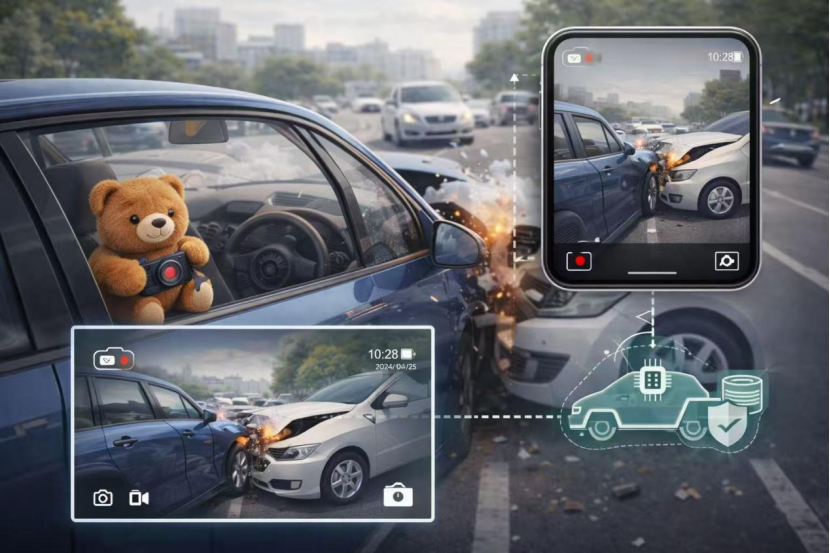
Scenario
The core records a factual event at the moment a collision occurs.
Principle
Triggered by abnormal impact and sudden state change, not continuous driving logs.
What’s different
Only the key moment is recorded, creating verifiable evidence.
12. Safe / Door / Cabinet Security
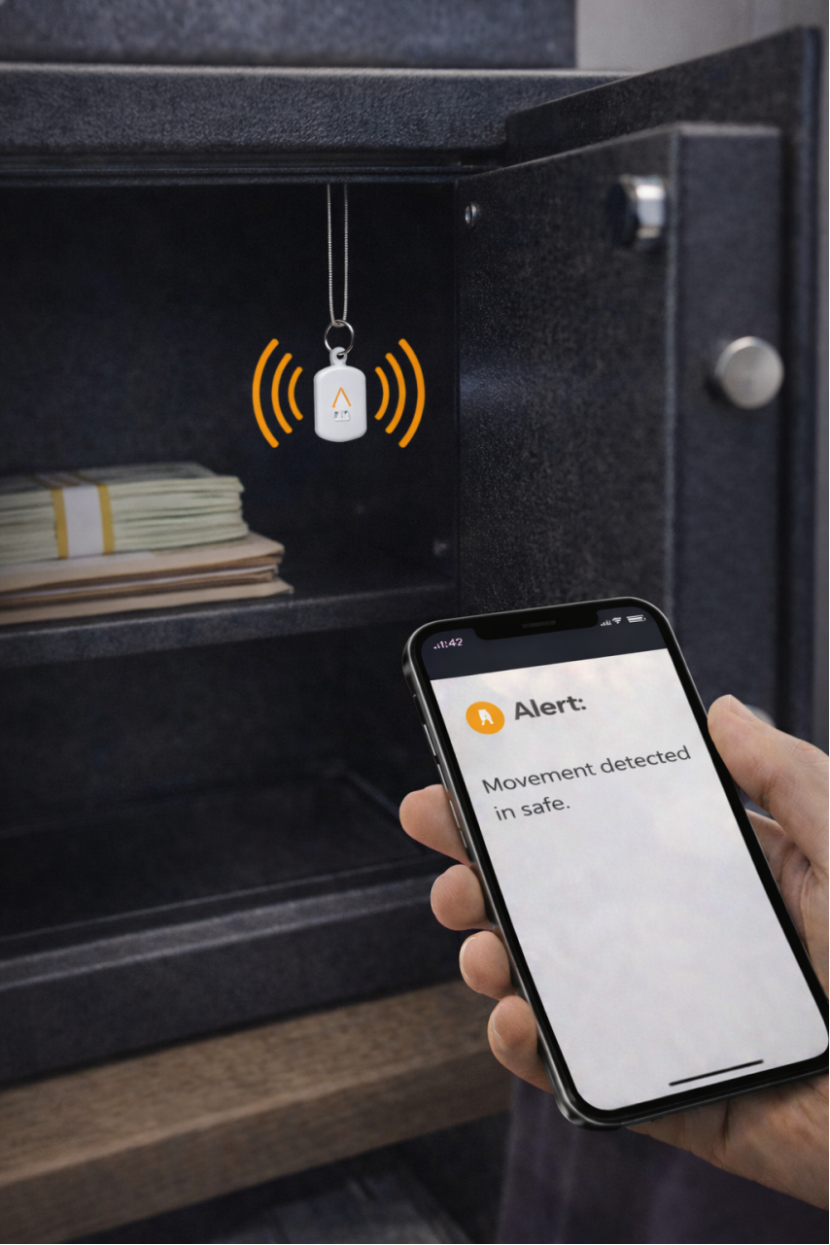
Scenario
The core is placed inside safes or cabinets and remains silent during normal conditions.
Principle
Triggers a factual event only when opening, knocking, or abnormal tampering is detected.
What’s different
No judgment, only facts. Users decide what is abnormal.
13. Long-Term Observation (Rare but Critical)
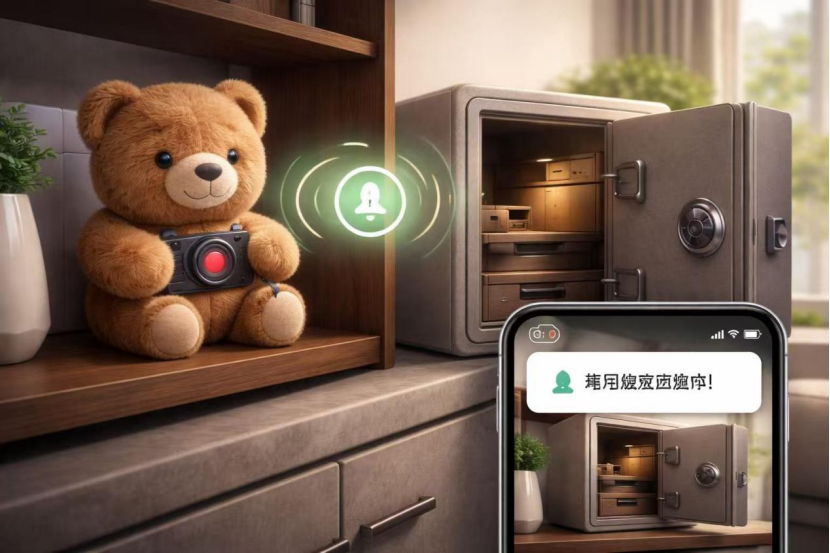
Scenario
The core may remain silent for months or years until a real change occurs.
Principle
Reports only once at the moment of state change.
What’s different
Designed for long silence and one critical alert.
14. Firearm Management (Regulatory)
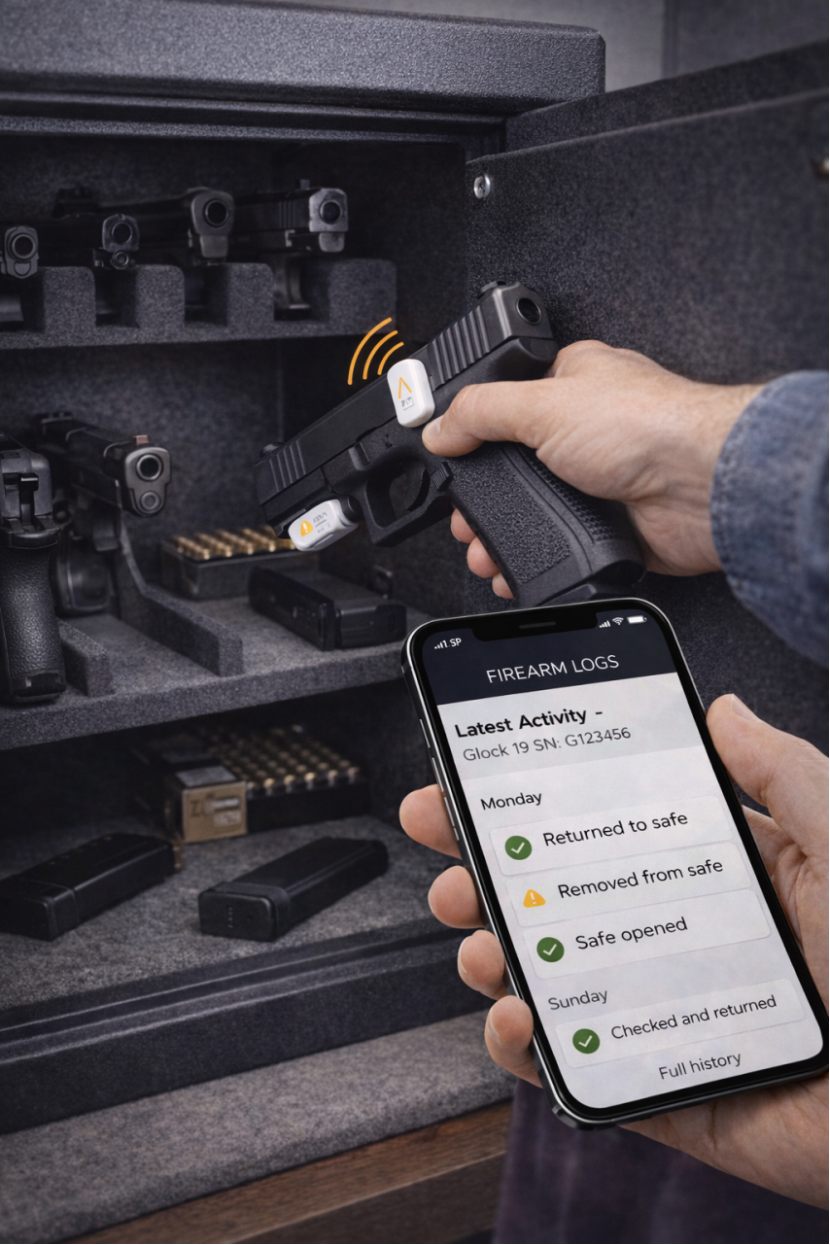
Scenario
The core records key state changes such as removal, movement, and return.
Principle
Event-based timeline without continuous tracking.
What’s different
Facts are recorded; compliance decisions remain human.
15. Supervision Devices (Ankle Bracelet)
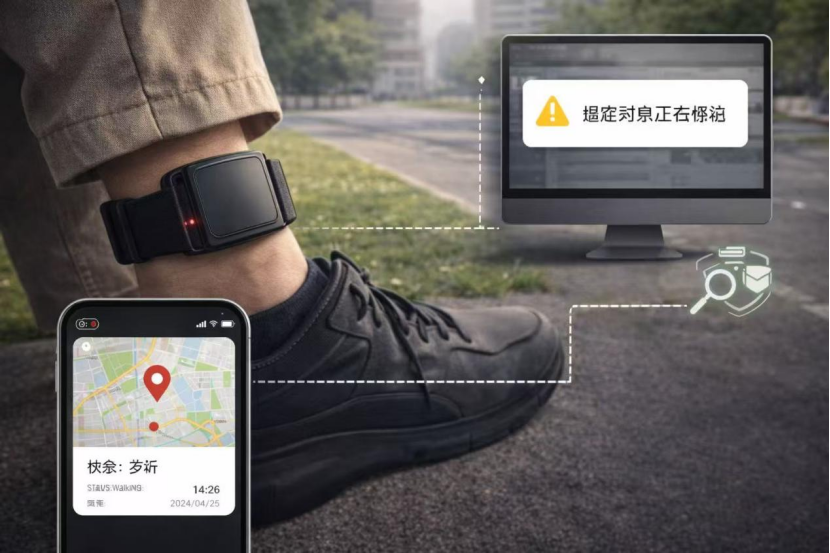
Scenario
The core records movement or state changes in supervision devices.
Principle
Event-based logging with on-demand queries.
What’s different
Not continuous surveillance, but factual accountability.
16. General Object Fact Confirmation
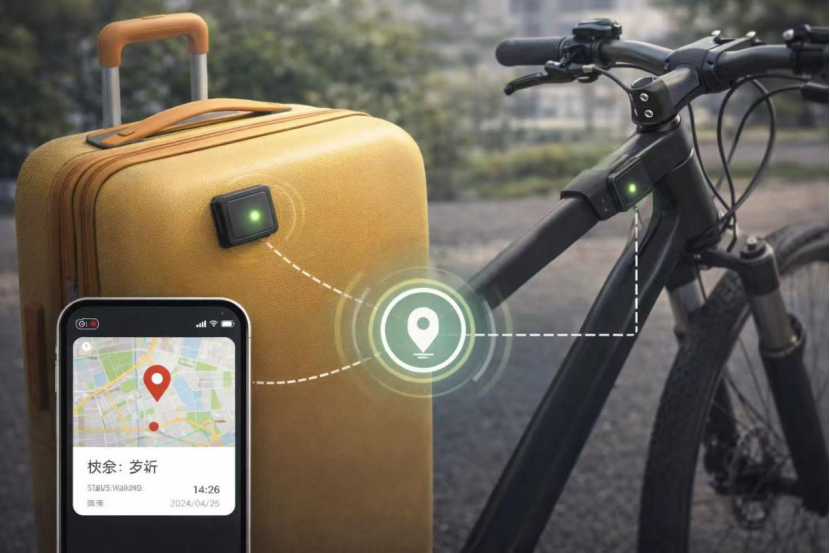
Scenario
The core attaches to any object. Users query only when confirmation is needed.
Principle
Returns a one-time factual state.
What’s different
Objects become confirmable, not constantly watched.
17. Tour Group Management
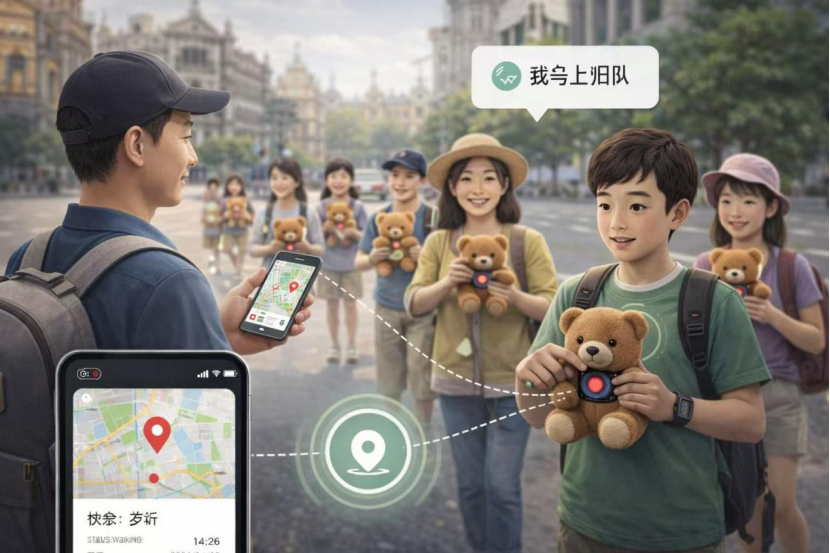
Scenario
Guides query group status; members respond with a single button press.
Principle
Query-driven confirmation, no continuous tracking.
What’s different
Minimal interruption with clear group awareness.
18. Quick Locate in Crowds / Large Garages
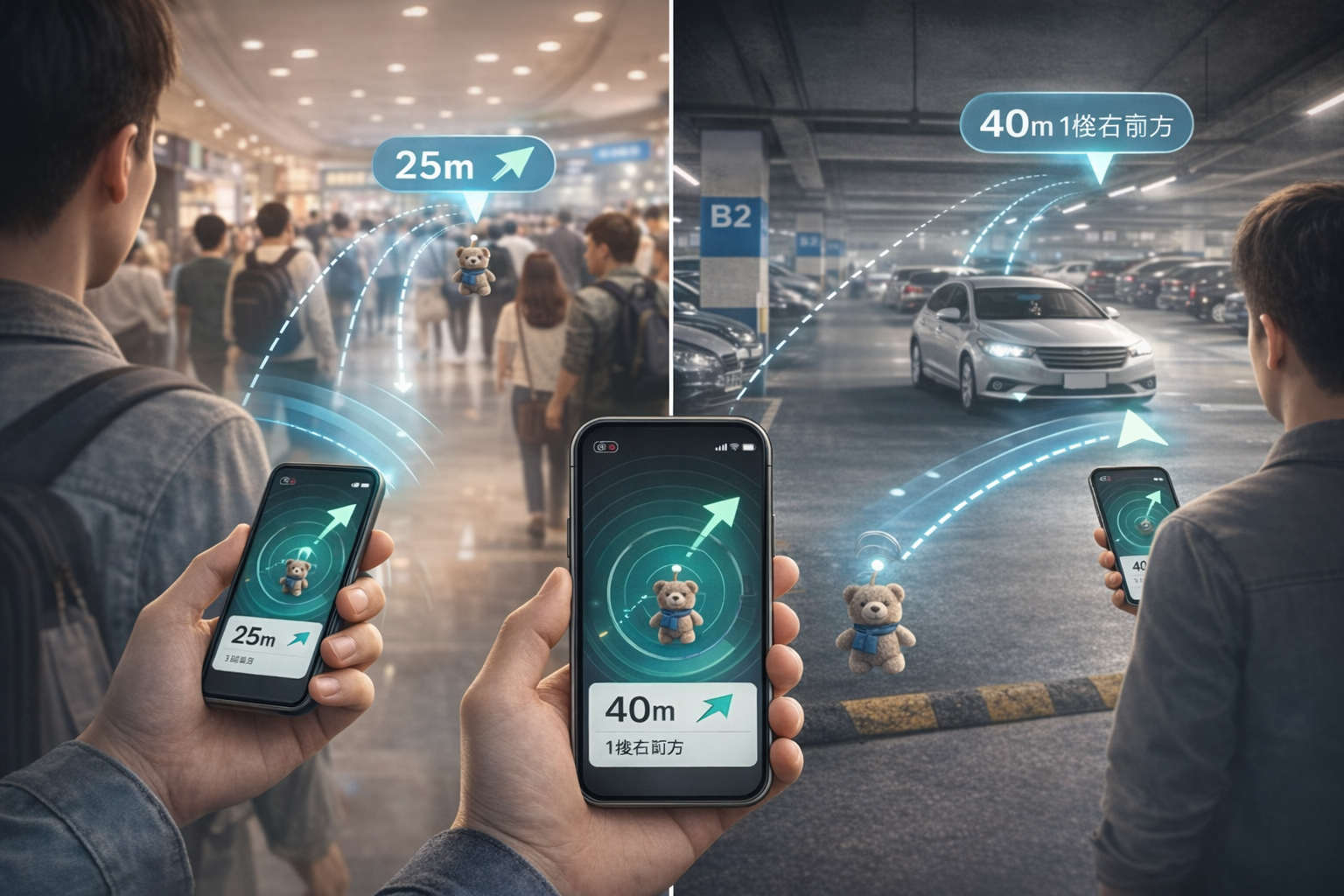
Scenario
Parents or owners quickly confirm the location or direction of a child or car.
Principle
Returns a one-time location or relative direction upon request.
What’s different
Not navigation or tracking, just fast confirmation.
19. Remote Warehousing & Disaster-Responsive Deployment
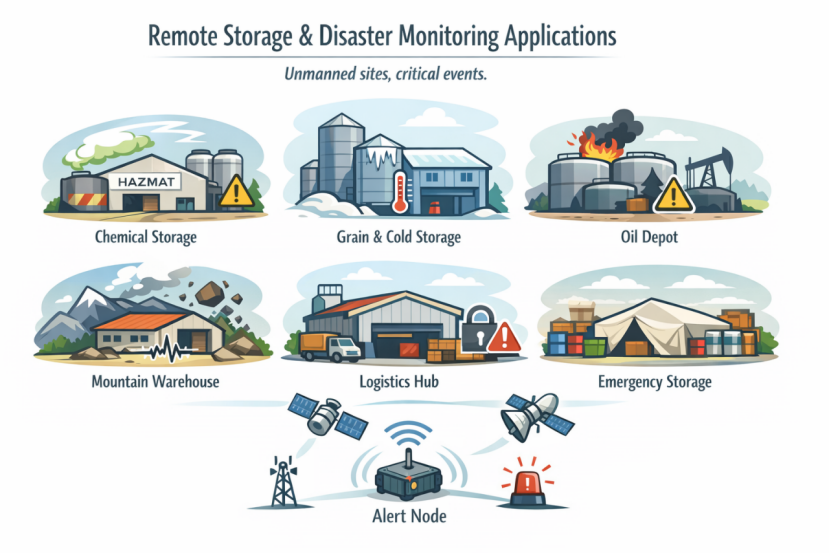
Applicable To
Mountain storage bases, hazardous material warehouses,
grain and cold storage facilities, fuel reserve depots,
logistics transit warehouses, and emergency supply storage centers.
Scenario
These facilities remain calm and unattended most of the time.
However, when vibration, leakage, abnormal opening, or structural disturbance occurs,
the system activates only at that moment,
recording the event and generating a traceable timeline.
Innovation Distinction
Not continuous monitoring,
but reliable recording at critical moments.
20. Basement Water Leakage & Radon Overlimit Monitoring
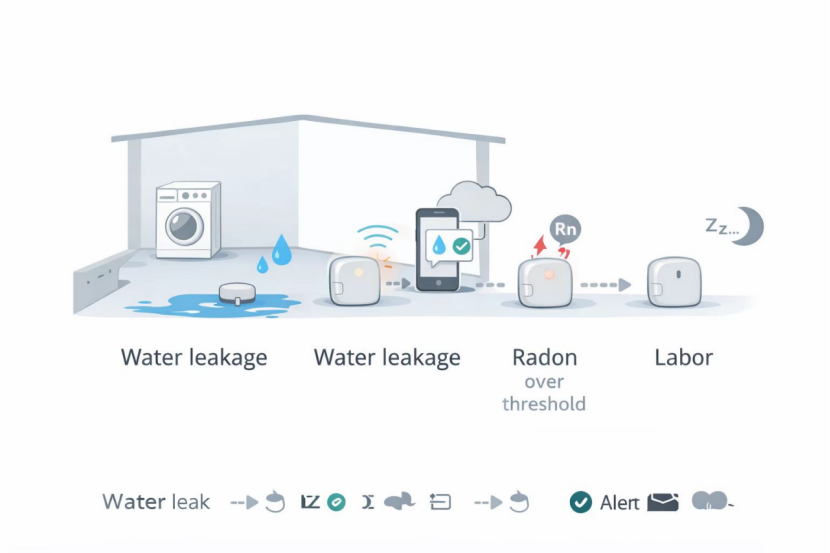
Scenario
Basements are typically unattended for long periods,
with environmental conditions remaining stable most of the time.
The system stays in deep sleep by default.
When ground water accumulation, pipe leakage,
or excessive radon concentration occurs,
the node is triggered,
outputs a fixed alert,
waits for user confirmation,
reports the event once,
and then returns to sleep.
Structural Characteristics
Event-triggered operation,
not continuously online,
no continuous data upload,
no semantic judgment,
forming a verifiable event-closure loop.
Innovation Distinction
Instead of continuously collecting environmental data,
the system records only the real moment when a critical condition occurs.
It captures verified events,
rather than generating persistent data streams.